“Tibet Is Not a Minority”: TYC Launches Global Hunger Strike After UN’s Muted Response to Self-Immolation
By Tenzin Chokyi
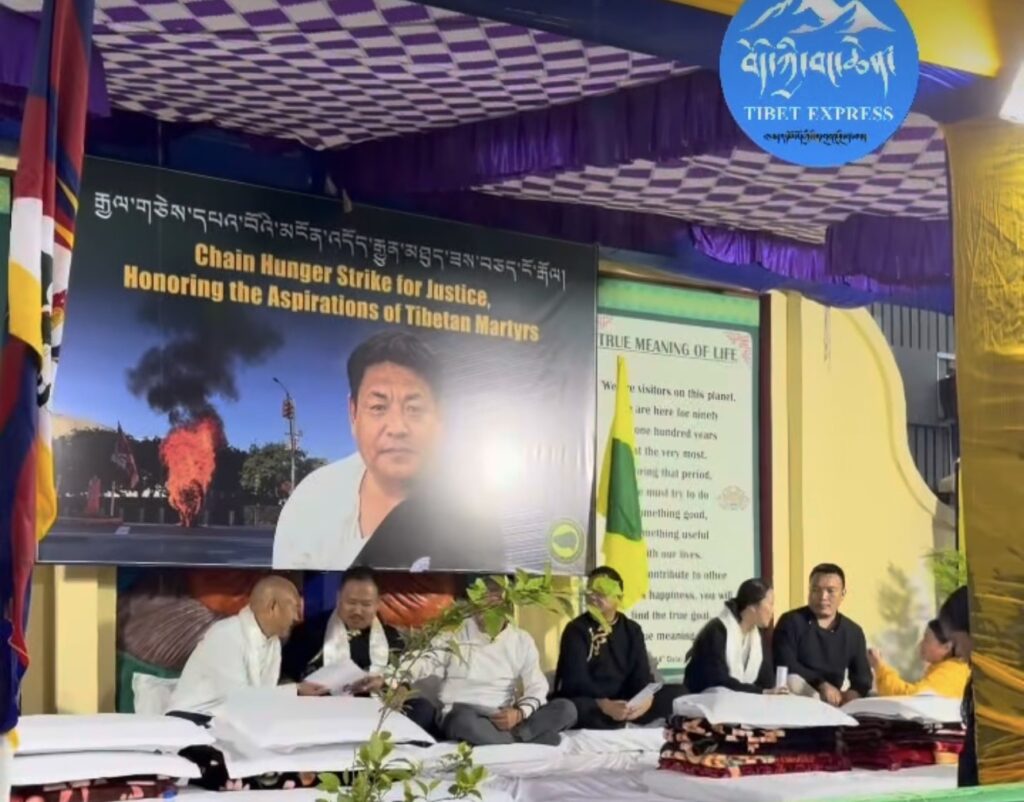
DHARAMSALA, 19 July: The Tibetan Youth Congress (TYC) has launched a worldwide chain hunger strike protest beginning today in Dharamsala, calling for concrete international action following the self-immolation and death of Tibetan independence activist Pawo (Martyr) Lobga Rangzen outside the United Nations headquarters in New York.
According to a statement issued by the TYC, the campaign honours Rangzen’s life and final appeal after he died on 2 July 2026, following his self-immolation protest. The organisation said his death must not be reduced to a passing tragedy or met only with condolences, describing his final protest as an appeal to the international community over Tibet’s continued occupation and the Tibetan people’s struggle for freedom and independence.
The first phase of the chain hunger strike began in Dharamsala today and will continue until 20 August, coinciding with the 49th day since Rangzen’s death. The campaign is expected to continue in New Delhi and outside the UN headquarters in New York, before expanding through more than 40 TYC regional chapters and supporters in around 20 countries. The campaign will also include coordinated demonstrations, candlelight vigils, public rallies, awareness campaigns, diplomatic outreach and other peaceful actions.
The TYC’s demands include a formal and substantive response from the United Nations to Rangzen’s final protest, including action by the UN Secretary-General, the Office of the UN High Commissioner for Human Rights and relevant UN mechanisms. It is also calling on the UN to press China to grant meaningful and unfettered access to Tibet for UN experts, independent observers and international journalists.
The organisation further rejected the language used by Stéphane Dujarric, spokesperson for the UN Secretary-General, which it said framed Tibetans merely as a ‘minority’ within China. The TYC said such language was historically inaccurate and politically consequential, arguing that it erases Tibet’s distinct national identity and reinforces the Chinese Communist Party’s narrative. “Tibet is not a minority of China. Tibet is an occupied nation,” the statement said.
The TYC also demanded the immediate repeal of China’s “Ethnic Unity and Progress Law,” which came into force on July 1. The organisation described the legislation as an instrument of forced assimilation, saying it provides a legal framework for accelerating the assimilation of people living under Chinese occupation and rule, including Tibetans.
The statement accused Chinese authorities of suppressing distinct languages, dominating religious institutions, rewriting history, destroying cultural heritage and separating children from their families and communities through state-run colonial boarding schools. “A government cannot legislate away the identity of a nation”, the TYC said, arguing that policies aimed at erasing a people’s language, culture, history and spiritual heritage constitute state-enforced assimilation.
Among its other demands, the TYC called for accountability for the policies and repression it says have created the conditions leading Tibetans to self-immolate; international recognition of Tibet’s historical status and right to independence; and the immediate and unconditional release of all Tibetan political prisoners, including the 11th Panchen Lama, Gedhun Choekyi Nyima.
The organisation said members of the public can join the hunger strike by registering at the protest site opposite the Dalai Lama Temple in Dharamsala. It said Rangzen’s death should be understood as a renewed call for resistance, solidarity and international action. The statement concluded: ‘Tibet was a nation. Tibet remains a nation. Tibet shall be free.”
Given President Trump’s frequent criticism of the world body as ‘ineffective’ and reliant on ’empty words’ rather than action, the publication reached out to the US State Department last week and asked how does the State Department view the UN’s recent response to the latest Tibetan self-immolation.
A spokesperson from the State Department on Friday evening responded by reaffirming the US’s standing position on Tibet, calling on China to return to direct, unconditional dialogue with the Dalai Lama, his representatives, and democratically elected Tibetan leaders to resolve differences and achieve meaningful autonomy for Tibetans, and reiterating Washington’s commitment to supporting Tibetans’ unalienable right to preserve their culture, language and religion without fear of interference.
The spokesperson further concurred that some of the UN’s agencies have drifted from their mission.
“As the President has said, the United States helped found the United Nations after World War II to prevent future global conflicts and promote international peace and security. But some of the UN’s agencies and bodies have drifted from this mission. They have failed to uphold fundamental human rights and too often shielded or empowered abusive regimes — contrary to the interests of the United States.”