The Fire That Rekindled Tibet’s Voice
By Khedroob Thondup
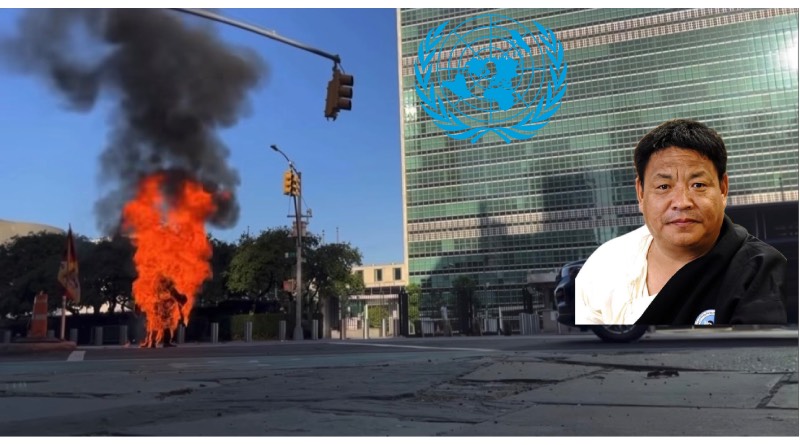
The recent self‑immolation of a Tibetan activist in front of the United Nations headquarters was not just a tragic act of desperation; it was a searing reminder of a struggle the world had allowed to fade into the background. For years, Tibet has been a muted issue in global diplomacy—overshadowed by trade wars, climate summits, and the shifting balance of power in Asia. Yet in one horrifying instant, the flames outside the UN reignited international attention, forcing governments, media, and ordinary citizens to confront a question too long ignored: what does Tibet mean to the conscience of the world?
A Forgotten Struggle: For decades, Tibet’s plight has been relegated to the margins of international discourse. Once a headline issue in the late 20th century, it gradually slipped into obscurity as global priorities shifted. The Tibetan cause became a footnote in human rights reports, mentioned but rarely acted upon. The UN itself, despite hosting countless resolutions on conflicts worldwide, has often treated Tibet as diplomatically untouchable—too sensitive, too entangled with China’s rise.
Why Self‑Immolation Shook the World: Self‑immolation is among the most extreme forms of protest, and its symbolism is devastatingly powerful. It communicates unbearable suffering, a refusal to remain silent, and a willingness to sacrifice everything to awaken others. In front of the UN, the act was not only personal but profoundly political: it confronted the very institution tasked with safeguarding human rights, demanding accountability.
The location mattered. Had this act occurred in a remote monastery or a provincial town, it might have been dismissed as another tragic footnote. But outside the UN, it became impossible to ignore. Cameras captured it, diplomats witnessed it, and the symbolism was unmistakable: Tibet’s voice had returned to the global stage, carried not by policy papers but by fire.
Renewed Global Attention: In the days following, international media outlets ran front‑page stories on Tibet, governments issued statements of concern, and human rights organisations renewed calls for dialogue. Suddenly, Tibet was no longer a forgotten cause but a pressing moral question. The act pierced through the diplomatic silence, compelling leaders to acknowledge what had been conveniently sidelined.
This renewed attention is not just about Tibet—it is about the credibility of global institutions. If the UN cannot respond meaningfully to such a direct plea for justice, what does that say about its moral authority? The self‑immolation exposed the gap between rhetoric and reality, reminding the world that human rights cannot be selectively defended.
The Moral Imperative: The tragedy forces us to ask: how many more voices must be lost before Tibet is treated not as a geopolitical inconvenience but as a human rights crisis? The flames outside the UN were not just a cry for Tibet—they were a cry for the conscience of humanity.
If the world allows this moment to fade, it will not only betray Tibetans but also erode the very principles the UN was founded upon. The renewed attention must translate into sustained action: diplomatic pressure, human rights monitoring, and a willingness to confront uncomfortable truths.
This op‑ed frames the self‑immolation as both a tragedy and a turning point—a moment that dragged Tibet back into the global spotlight and challenged the world to act.

Khedroob Thondup is a former Tibetan diplomat and parliamentarian, and nephew of the Dalai Lama. He is also the editor of the books Dalai Lama, My Son and Tibet in Turmoil.
The views expressed in this article are those of the author and should not be attributed to Tibet Express.