The Warning Tibet’s Aristocracy Refused to Hear
By Khedroob Thondup
History is often shaped not only by the threats that emerge, but by the warnings that go unheeded. In the case of Tibet, one of the most consequential warnings came from Gyalo Thondup, the elder brother of the Fourteenth Dalai Lama. After returning to Tibet in 1952, he reportedly urged the Tibetan aristocratic elite to confront a reality they preferred to ignore: the Chinese Communist Party would almost certainly use Tibet’s feudal social structure, and particularly the existence of bonded labour and serfdom, as both a political justification and a revolutionary tool for consolidating its control over Tibet. Accounts of his return from Tibet in 1952 describe him as deeply concerned about China’s intentions and skeptical of Beijing’s promises of autonomy.
Thondup understood something that many Tibetan nobles did not. While aristocrats viewed Tibet’s social order as an ancient and stable system, Communist China viewed it as a propaganda gift. The Chinese leadership had built its legitimacy on promises of social revolution. It portrayed itself as the liberator of peasants, workers, and oppressed classes. To Beijing, Tibet’s hierarchical social structure provided the perfect narrative: China could present itself not as an occupying force but as a liberator.
According to this perspective, Thondup argued that Tibet should not wait for China to exploit the issue. If Tibetan society was to preserve its independence and moral authority, reform had to come from within. Aristocratic families should voluntarily emancipate their bonded labourers, modernise their estates, and remove the very grievance that Beijing would use to justify intervention.
His warning was remarkable not simply because it was politically astute, but because he was willing to act on it personally.
Before departing for India, Thondup reportedly freed all the bonded labourers on the estates under his own control. He understood that meaningful reform required example rather than rhetoric. If Tibet’s aristocracy expected others to sacrifice privilege, its members would first have to examine their own privileges.
Yet the response from much of the Tibetan elite was resistance, skepticism, or indifference. Many nobles believed the traditional system was inseparable from Tibet’s religious and cultural identity. Others assumed China would honour its promises under the Seventeen-Point Agreement. Many simply could not imagine that Tibet’s social structure had become a strategic vulnerability.
The tragedy is that Thondup’s warning was not merely about social justice. It was about national survival.
Had widespread reform occurred in the early 1950s, Tibet might have denied Beijing one of its most effective political arguments. While social reform alone would not necessarily have prevented Chinese domination, it could have strengthened Tibet’s position at home and abroad by demonstrating a willingness to modernise on its own terms.
One family reportedly recognised this danger. The Tethong family understood that preserving Tibet required adapting to a changing world. Their willingness to support reform stands as a reminder that not all members of Tibet’s aristocracy were imprisoned by tradition. Some saw reform not as a betrayal of Tibet but as a way to protect it.
The lesson remains relevant today. Societies that refuse to reform themselves often discover that others will attempt to reform them by force. Genuine reform carried out voluntarily is almost always preferable to change imposed from outside.
Looking back, the significance of Gyalo Thondup’s warning lies not only in its accuracy but in its moral clarity. He saw that Tibet faced two intertwined challenges: external aggression and internal stagnation. He believed that confronting the second would strengthen resistance to the first.
History suggests he was right.
The story of Tibet’s lost independence is often told as a tale of foreign invasion. It is also, however, a story about the cost of ignoring those rare individuals who can see danger before everyone else. Among those voices, Gyalo Thondup’s stands out as one of the clearest and one of the most tragically disregarded.
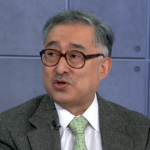
Khedroob Thondup is a former Tibetan diplomat and parliamentarian and nephew of the 14th Dalai Lama. He is also the editor of the book, ‘Dalai Lama, My Son and Tibet in Turmoil.’
The views expressed in this article are those of the author and should not be attributed to Tibet Express.