Why John Paul II and the Dalai Lama Showed the World How Faiths Can Work Together
By Khedroob Thondup
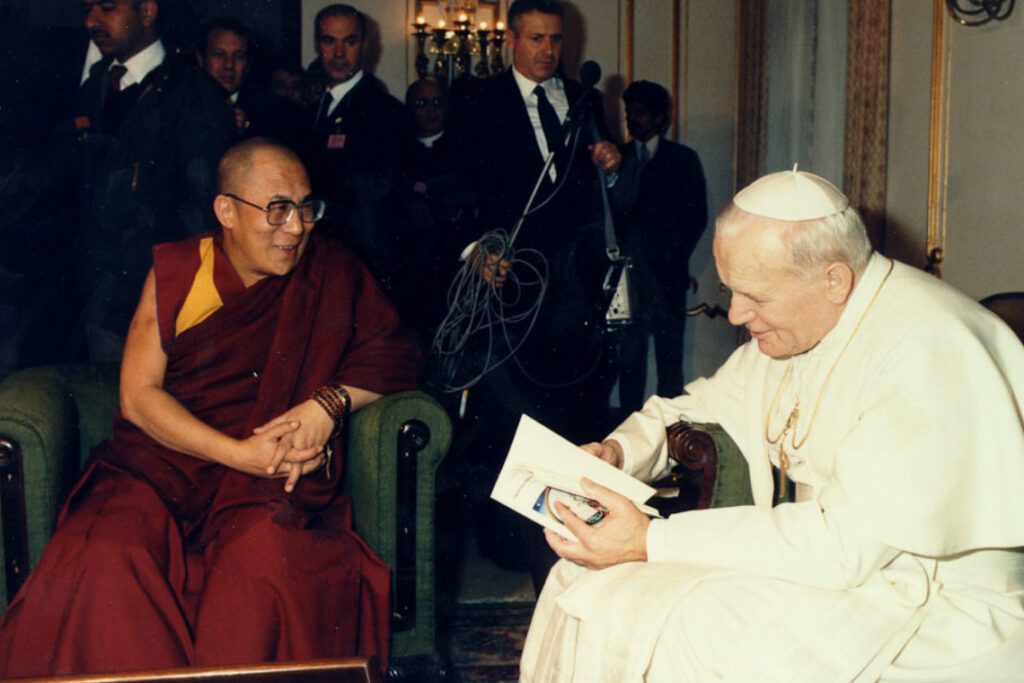
In an age when religious differences are often portrayed as barriers, the friendship between Pope John Paul II and His Holiness the 14th Dalai Lama offers a more compelling story: deep conviction need not produce division; it can instead create common purpose.
Few religious leaders of the twentieth century commanded as much moral authority as Pope John Paul II and the Dalai Lama. One led more than a billion Catholics. The other became the global voice of Tibetan Buddhism and the Tibetan people in exile. Their theological beliefs differed profoundly. Yet they built a relationship marked by mutual respect, personal warmth, and a shared commitment to peace, human dignity, and interreligious dialogue.
The historical record shows that the two leaders met repeatedly over more than two decades. The Dalai Lama’s official records list meetings with Pope John Paul II in 1980, 1986, 1988, during the 1990s, including in 1999, and again in 2003. Their encounters were not symbolic one-off photo opportunities. They reflected an ongoing relationship between two men who saw value in sustained conversation.
Why did they get along so well?
First, they shared a belief that religion should serve humanity rather than itself. Both leaders consistently argued that spiritual values were essential in an increasingly materialistic world. After John Paul II’s death in 2005, the Dalai Lama recalled that they were “in complete agreement” that human beings require not only material development but also spiritual nourishment. He remembered that the Pope repeatedly emphasized the importance of spiritual values and expressed concern about younger generations losing interest in them.
Second, both men understood oppression from personal experience. John Paul II grew up in Nazi-occupied Poland and later lived under communist rule. The Dalai Lama fled Tibet after the Chinese takeover and spent decades in exile. In a statement following the Pope’s death, the Dalai Lama said that these experiences created “an immediate common ground” between them and helped foster a close friendship. Shared suffering often creates understanding that formal diplomacy cannot.
Third, they were pioneers of interfaith dialogue. John Paul II’s famous 1986 Assisi gathering brought together leaders from many world religions to pray for peace. The Dalai Lama was invited to participate and later praised the event as a powerful demonstration that different faith traditions could stand together and send a message of peace. At a time when religious exclusivism often dominated public discussion, both men modeled a better path: confidence in one’s own faith combined with respect for others.
Perhaps most remarkably, neither leader saw dialogue as a threat to religious truth. They did not attempt to erase their differences. John Paul II remained thoroughly Catholic; the Dalai Lama remained thoroughly Buddhist. Their relationship succeeded precisely because it was based not on theological compromise but on mutual esteem.
The Dalai Lama repeatedly spoke of his admiration for the Pope’s efforts on behalf of peace and religious harmony. During a 2003 meeting at the Vatican, he publicly expressed appreciation for John Paul II’s work promoting peace throughout the world. Likewise, the Pope’s willingness to meet the Tibetan leader again and again demonstrated his belief that engagement across religious boundaries was worthwhile and necessary.
Critics sometimes assume that strong religious identities inevitably lead to conflict. John Paul II and the Dalai Lama proved the opposite. Their friendship demonstrated that people can disagree profoundly about doctrine while agreeing on the importance of compassion, morality, religious freedom, and human dignity.
Today, as societies become increasingly diverse and polarised, their example remains relevant. The relationship between Pope John Paul II and the Dalai Lama was not remarkable because it ignored differences. It was wonderful because it transcended them. Together, they showed that genuine faith, far from isolating people from one another, can inspire meaningful cooperation in the service of the common good.
That may be their most enduring lesson: peace is not achieved when everyone believes the same thing. It is achieved when people of conviction treat one another with respect, friendship, and a shared commitment to humanity.
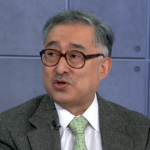
Khedroob Thondup is a former Tibetan diplomat and parliamentarian and nephew of the 14th Dalai Lama. He is also the editor of the book, ‘Dalai Lama, My Son and Tibet in Turmoil.’
The views expressed in this article are those of the author and should not be attributed to Tibet Express.