Tibetan Peace Marcher Completes 800-Kilometre March to Leh and Back to Promote Tibetan Language, Culture
By Tenzin Chokyi
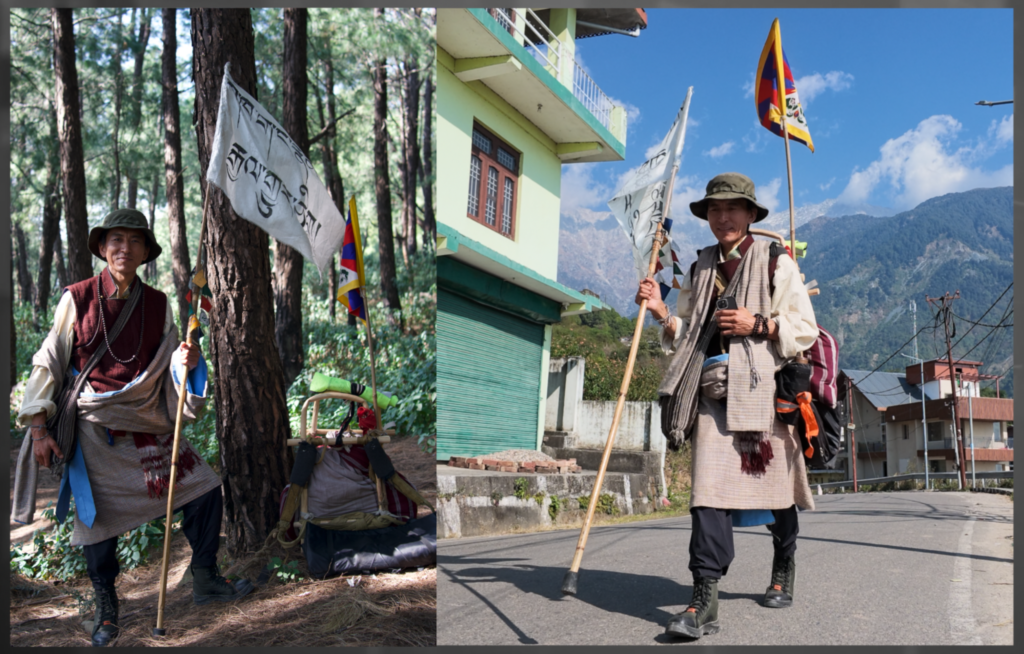
DHARAMSALA, 11 Nov: Tibetan peace marcher Kalsang Tharchin completed his solo peace march on Wednesday, returning to Dharamsala after nearly four months of walking across the challenging Himalayan terrain to raise awareness about the preservation of the Tibetan language and cultural identity.
Tharchin began the march on 15 July from Dharamsala, travelling towards Leh in Ladakh, where he reached the Tibetan settlement of Choglamsar on 17 August after covering approximately 800 kilometres. He subsequently began the return journey on 8 October from Shewatsel Phodrang, the residence of the Dalai Lama in Leh, and arrived back in Dharamsala on 11 November.
Throughout the journey, Tharchin advocated for the preservation of the Tibetan language and cultural identity while protesting against China’s Law on Promoting Ethnic Unity and Progress, which came into effect on 1 July 2026. He also undertook the march in honour of Pawo (Martyr) Lobga Rangzen, a Tibetan independence activist who self-immolated outside the United Nations Headquarters in New York on 2 July.
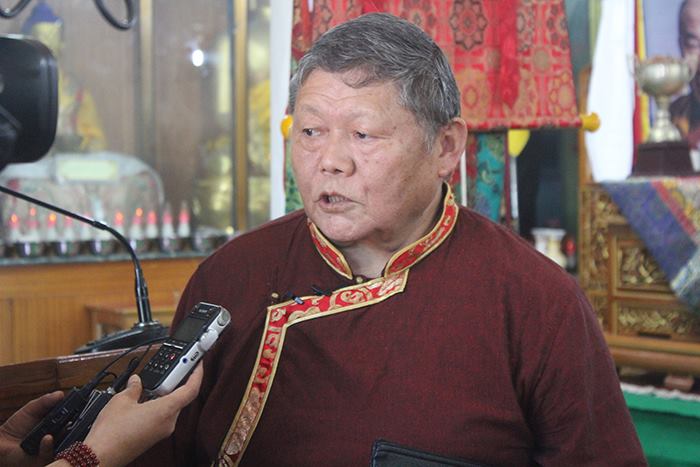
Speaking to Tibet Express after completing the march, Tharchin said that while external factors, including China’s sustained attempts to undermine the Tibetan language and the wider forces of globalisation, pose significant challenges to its preservation, the Tibetan exile community must also examine its own responsibility. He questioned whether Tibetans were doing enough to preserve and practise their language before pointing fingers at China, stressing that countering external pressures requires consistent practice and a deeper understanding of the importance of the language within the exile community.
He further urged the younger generation to take greater responsibility for preserving and practising Tibetan, as the older generation had done, despite living in an increasingly changing and fast-paced world. He emphasised that the question of how much the community itself has contributed to language preservation remains an important one to confront.
The return journey was marked by difficult weather conditions in the Himalayan region. On 15 October, Himachal Pradesh Police stopped Tharchin approximately four kilometres from Sershu over safety concerns as he attempted to proceed towards Baralacha La Pass amid heavy snowfall. He later turned back towards Sershu and planned to resume the march when weather conditions improved.
China’s new law has drawn international criticism amid concerns that it provides a legal framework for assimilationist policies affecting the distinct national, linguistic and cultural identities of Tibetans, Uyghurs, Mongolians and other oppressed communities.