Why Beijing’s Promise of Future Restraint Rings Hollow
By Khedroob Thondup
The Chinese Communist Party wants the world to believe that its growing assertiveness is merely a temporary phase on the road to national rejuvenation. According to Beijing’s own narrative, China is pursuing the “great rejuvenation of the Chinese nation” and seeks to achieve its Second Centenary Goal by 2049, the 100th anniversary of the founding of the People’s Republic of China. The goal is to build a prosperous, strong, and modern socialist country while restoring what the CCP views as China’s rightful place in world affairs.
There is nothing inherently objectionable about national development or greater international influence. Every major nation seeks security, prosperity, and respect. The problem is that the CCP increasingly defines national rejuvenation not merely as domestic modernisation but as a fundamental shift in the global balance of power. Beijing’s official rhetoric repeatedly emphasises the “great rejuvenation” of China and presents it as a historic mission that is both inevitable and unstoppable.
Many observers interpret this ambition as an effort to achieve parity with, or in some areas surpass, the United States in economic, military, technological, and diplomatic influence by mid-century. Whether China ultimately reaches that goal is uncertain. What is clear is that Beijing has spent years investing heavily in military modernisation, expanding its influence abroad, and seeking greater control over strategic technologies and supply chains.
Supporters of engagement often argue that once China feels secure and respected as a great power, its more confrontational behaviour will subside. The theory is simple: a rising power behaves aggressively while climbing the ladder but becomes more accommodating after reaching its destination.
History suggests otherwise.
Great powers rarely stop competing simply because they achieve a milestone. Success tends to generate new ambitions rather than satisfaction. Nations that acquire greater economic and military capabilities frequently seek additional influence to protect those gains. There is little evidence that achieving the CCP’s 2049 objectives would suddenly persuade Beijing to relax its pursuit of strategic advantage.
Indeed, several aspects of the CCP’s worldview argue against such optimism. Xi Jinping has repeatedly linked national rejuvenation to overcoming what Beijing describes as a century of national humiliation and reclaiming China’s rightful status in the international system. That narrative is not centred on reaching a finish line. It is centred on correcting a perceived historical imbalance.
If leaders believe their country has been denied its proper place for generations, why would they stop pressing for greater influence once they attain it?
Moreover, many of China’s current points of friction with its neighbours are not tied directly to its level of development. Territorial claims in the South China Sea, pressure on Taiwan, border disputes, military coercion, and efforts to reshape international norms stem from enduring strategic objectives. Those objectives are unlikely to disappear simply because a calendar turns to 2049.
The CCP also frequently describes national rejuvenation as a long-term historical process rather than a finite project. Chinese official statements continue to characterise rejuvenation as an ongoing mission and an “unstoppable” trend. Such language suggests continuity, not closure.
None of this means conflict with China is inevitable. Nor does it mean Beijing cannot cooperate constructively with other nations on trade, climate, health, or security challenges. China remains a vital actor whose participation will be essential on many global issues.
But policymakers should be skeptical of the notion that the CCP’s assertiveness has a built-in expiration date. Hope is not a strategy. The belief that Beijing will automatically become less coercive after achieving national rejuvenation rests more on wishful thinking than on evidence.
By 2049, China may well be wealthier, stronger, and more influential than it is today. The more important question is whether a more powerful CCP would become more restrained. Given the Party’s ideology, strategic objectives, and conduct over the past decade, that outcome appears not impossible but highly improbable.
The prudent course for the United States and its democratic partners is therefore not to assume future moderation. It is to engage China where interests overlap, deter coercion where interests collide, and recognise that great-power competition is likely to persist long after 2049 arrives.
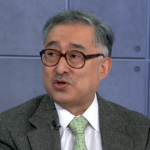
Khedroob Thondup is a former Tibetan diplomat and parliamentarian and nephew of the 14th Dalai Lama. He is also the editor of the book, ‘Dalai Lama, My Son and Tibet in Turmoil.’
The views expressed in this article are those of the author and should not be attributed to Tibet Express.