CTA Holds Prayer Service in Dharamsala as Flood Disaster Devastates Tibetan Settlements Near Kyirong Border
By Tenzin Chokyi
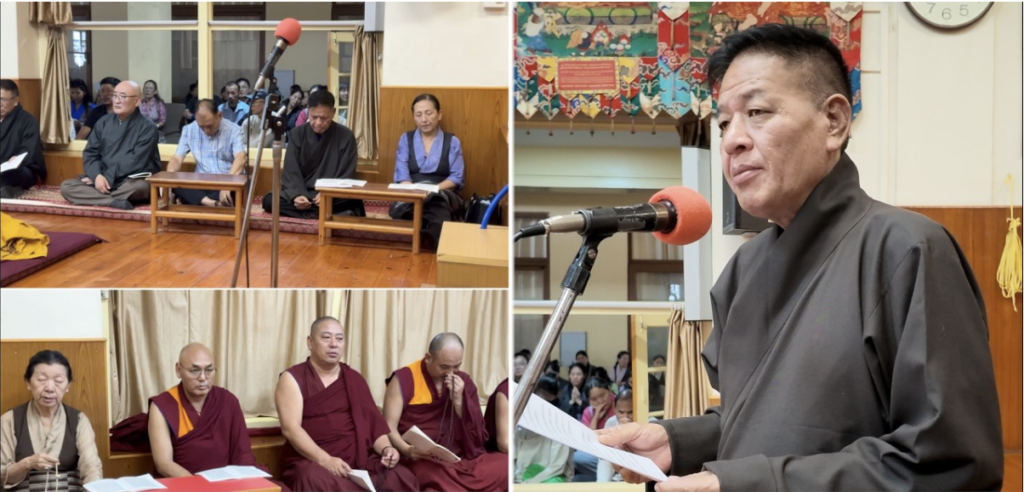
DHARAMSALA, August 27: A catastrophic flood along the Nepal-Tibet border on Wednesday devastated Tibetan communities on both sides of the frontier, washing away homes and entire settlement clusters in Nepal while hundreds remain missing across the border in occupied Tibet, according to information presented by the Central Tibetan Administration (CTA) on Thursday.
Speaking at a prayer service at the Tsuklakhang in Dharamsala for those affected by the disaster in Nepal, CTA Sikyong (President) Penpa Tsering said the Nepalese government had identified Shabru settlement, nearby Shabru Market and Timure along the Kyirong border as the worst-affected areas within the jurisdiction of the Sha-Wa-Ra Sum Tibetan Settlement Office.
According to information cited by the CTA, five scattered Tibetan settlements and communities are located across the affected area.
At Rasuwa Gegayling Settlement, all 11 households were swept away by the flood, with the two elderly residents who lived there currently missing. At Shabru Market, two homes were completely swept away. One person died, while three others remain missing.
In Timure, six people from two Tibetan households are reported missing.The six households located across Tengpoche, Khangjim and Briddim were spared damage as they are situated on higher ground.
Reports received Thursday morning indicated that the Nepalese government had rescued six Tibetans, although the information was still being verified.
The flash flood, reported as the deadliest flood disaster in modern Nepalese history, has caused catastrophic damage across the country, leaving more than 165 people confirmed dead and 826 reported missing, according to Nepalese authority figures cited by the CTA.
Across the border in Tibet, Chinese authorities have reported three deaths and 558 people missing in the affected area.
Sikyong Penpa Tsering said the scale of casualties on the Tibet side remained difficult to confirm because of what he described as China’s secrecy and limited disclosure surrounding the catastrophe. He said Chinese authorities withheld information about the casualties for a day, with details on the scale of the deaths and missing persons released only on Thursday.
The disaster was triggered by the collapse of the lower part of a Himalayan glacier, which sent ice, rock and debris into the Lhende Khola. The river, a tributary of the Bhote Koshi, carried the resulting floodwaters downstream into Nepal, where the flash floods destroyed roads and power infrastructure and inundated villages, according to Reuters.