In Rain and Heat, Tibetan Activists Cycle 360 km to Dharamsala, Honouring Martyr Lobga Rangzen
By Tenzin Chokyi
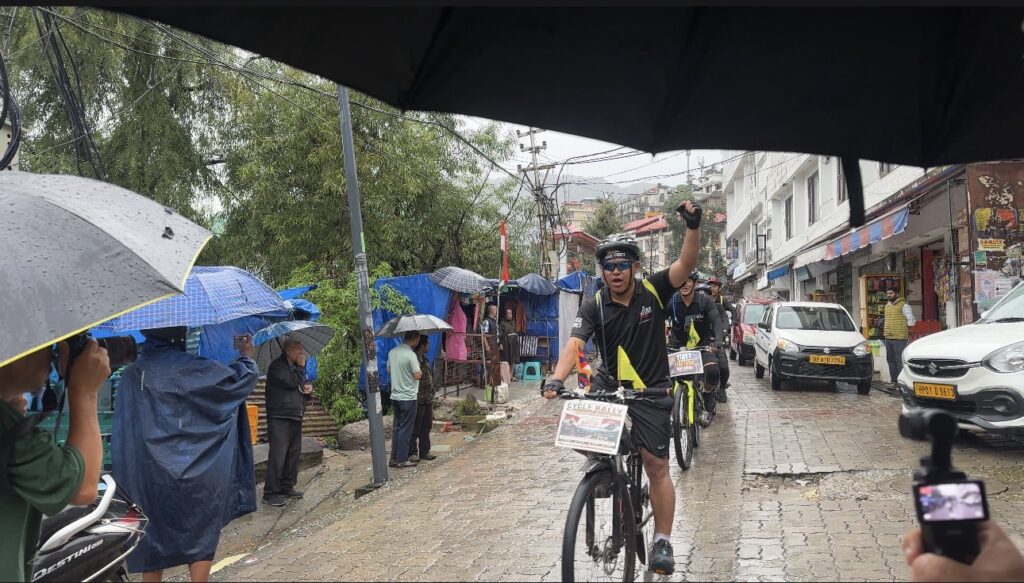
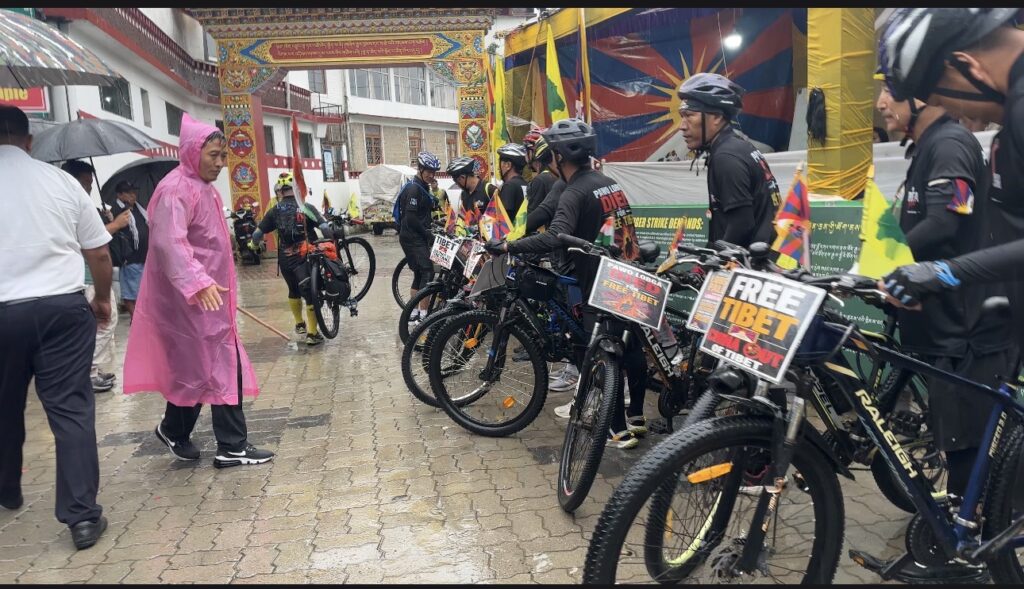
DHARAMSALA, 19 August: Tibetan activists completed a more than 360-kilometre cycling journey from Paonta Sahib to Dharamsala on Wednesday, carrying messages of resistance inspired by martyr Lobga Rangzen to the Tibetan Youth Congress’s (TYC) chain hunger strike site in McLeod Ganj amid persistent rain.
Carrying banners and pamphlets bearing messages including “Tibet belongs to Tibetans, not China,” the cyclists rode through Dehradun and Punjab before reaching Dharamsala, where the TYC has been holding a chain hunger strike since 19 July, following Lobga Rangzen’s self-immolation outside the United Nations headquarters in New York on 2 July.
The seven-day campaign, organised by the Regional Tibetan Youth Congress (RTYC) Paonta Sahib and launched on 13 August, was inspired by the TYC Centrex-led campaign from Dharamsala to honour and carry forward martyr Lobga Rangzen’s aspiration for a free and independent Tibet.
Lobga Rangzen, a Tibetan independence activist and president of the Tibetan National Congress’ New York–New Jersey chapter, died after setting himself on fire in front of the UN headquarters on 2 July, a day after China’s so-called new Law on “Promoting Ethnic Unity and Progress” came into force.
For the cyclists, the timing of his death and the law’s implementation remain inseparable.
They said their journey was intended to express their absolute rejection of China’s ethnic unity law, which they believe threatens Tibetan identity, and to call on the United Nations to take responsibility for the deaths of Rangzen and more than 170 Tibetans who have self-immolated, both inside occupied Tibet and in exile, in protest against Chinese rule.
The cyclists said the journey was also an expression of gratitude to India and its people for providing refuge to Tibetans for more than six decades.
As they made their way through the monsoon, rain accompanied their arrival in Dharamsala on Wednesday. The cyclists said, however, that rain did not pose a major challenge during the journey. They described the intense heat encountered while cycling through Dehradun as the more difficult part of the journey.
After seven days on the road, their arrival at the hunger strike site brought their journey back to the campaign that had inspired it: keeping alive Rangzen’s demand for a free Tibet and amplifying the call for international accountability over his death and the continuing repression of Tibetans under China’s colonial rule.