Guarding Tibetan Identity Against Sinicization
By Khedroob Thondup
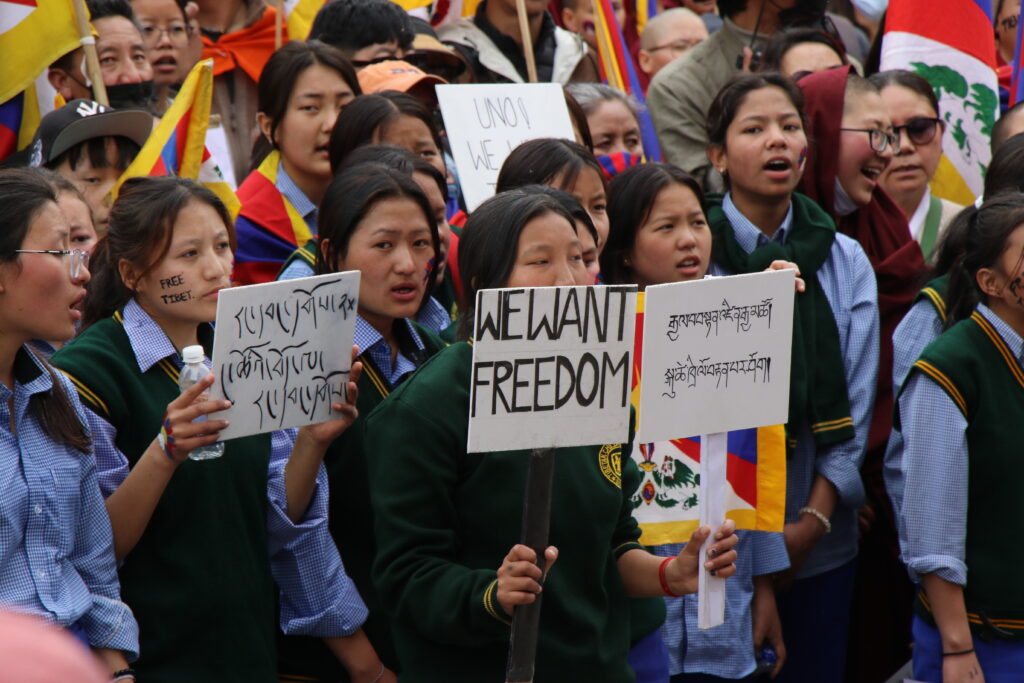
The Tibetan struggle today is not only about sovereignty or autonomy—it is about survival. Communist China’s project of Sinicization is relentless: language policies that erode Tibetan in schools, religious restrictions that hollow out monasteries, demographic engineering that dilutes Tibetan presence in our own homeland. If Tibetans—inside Tibet and across the diaspora—do not act decisively, the distinctiveness of our culture risks being absorbed into a homogenised Chinese identity.
Language Preservation. Language is the spine of identity. In Tibet, Chinese authorities push Mandarin as the medium of instruction, relegating Tibetan to the margins. Tibetans must resist by: Establishing underground Tibetan-language schools and community classes. Diaspora families ensuring Tibetan is spoken at home, not just ceremonially. Writers and artists producing Tibetan-language content—songs, films, literature—that keeps the language alive and relevant.
Religious Resilience. The monasteries are more than spiritual centers; they are cultural fortresses. Beijing’s interference in monastic life and its attempts to control reincarnation threaten the very soul of Tibetan Buddhism. Tibetans must: Document and digitize teachings to safeguard them against censorship. Support independent monastic networks in exile.
Encourage young Tibetans to see Buddhism not as ritual alone but as a living philosophy of resistance.
Diaspora Mobilization. The diaspora is Tibet’s breathing space. From Dharamsala to New York, Tibetans abroad must: Lobby governments to hold China accountable for cultural erasure.
Build alliances with other oppressed peoples—Uyghurs, Mongols, Hong Kongers—whose struggles echo ours. Use digital platforms to amplify Tibetan voices, countering Beijing’s propaganda machine.
Cultural Innovation. Tradition must evolve to survive. Tibetans should: Fuse Tibetan art, music, and cuisine with global forms to keep them vibrant. Create Tibetan-language apps, podcasts, and media channels. Celebrate Tibetan festivals in public spaces worldwide, making them visible and unignorable.
Intergenerational Responsibility. The greatest threat is apathy. If Tibetan youth see their identity as ornamental rather than essential, Sinicization wins. Elders must: Pass down stories of resistance and exile. Frame Tibetan identity not as nostalgia but as a living inheritance.
Encourage youth to lead movements, not just inherit them.
Closing Reflection. China’s project is clear: to erase Tibet as a distinct civilization. Our response must be equally clear: to live Tibetan identity so fully that it cannot be erased. Whether in Lhasa or London, Shigatse or San Francisco, Tibetans must act with urgency. The struggle is not abstract—it is about whether our grandchildren will know the taste of tsampa, the sound of Tibetan chants, the sight of prayer flags fluttering against Himalayan winds.
The choice is stark: assimilation or resistance. Tibetans must choose resistance, every single day.

Khedroob Thondup is a former Tibetan diplomat and parliamentarian, and nephew of the Dalai Lama. He is also the editor of the books Dalai Lama, My Son and Tibet in Turmoil.
The views expressed in this article are those of the author and should not be attributed to Tibet Express.