Forty-Seven Years Since Deng’s Opening
By Khedroob Thondup
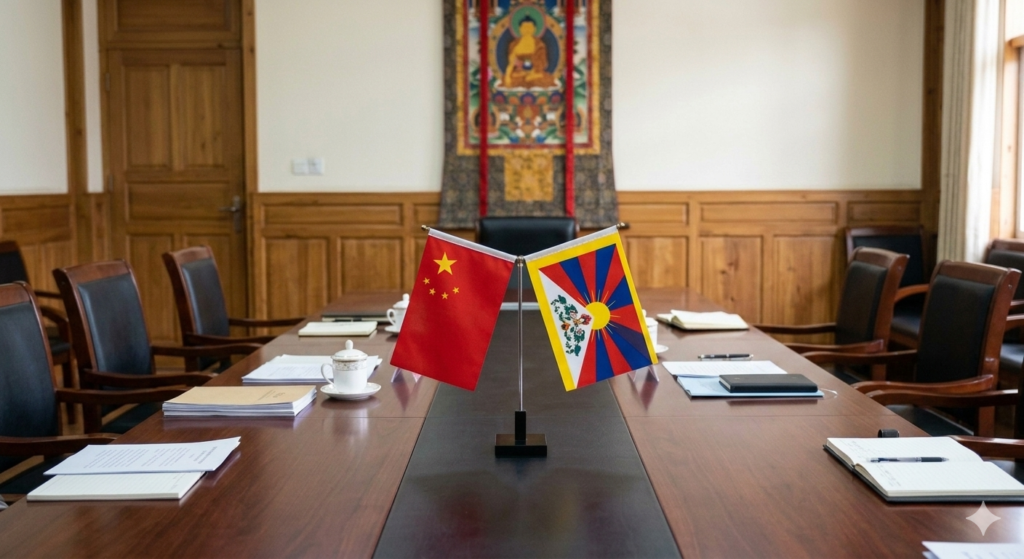
In 1979, Gyalo Thondup’s meeting with Deng Xiaoping in Beijing marked the beginning of a new chapter in Tibet’s modern history. Deng’s words were blunt: “Anything but Independence can be discussed.” With that statement, the parameters of dialogue were set, and Tibetans entered into a process that would span decades, yielding both moments of hope and deep disillusionment.
The Opening of Dialogue.
The meeting was not symbolic alone; it led to dialogue sessions with China’s top leadership. For the first time since 1959, Tibetans in exile were able to sit across the table from Beijing officials. The talks were cautious, but they opened doors that had long been sealed.
Fact-Finding Missions.
Official Tibetan delegations were permitted to travel across Tibet on fact-finding missions. What they saw was devastating: monasteries reduced to rubble, famine scars etched into communities, and a cultural landscape hollowed out by two decades of repression. Between 1959 and 1979, Tibet had endured death, destruction, and the systematic dismantling of its traditions. These missions recorded the evidence, creating a clear picture of the suffering endured.
Reunification of Families.
One of the most human outcomes of Deng’s opening was the border reopening. Families separated for twenty years were reunited. Tears flowed at border crossings, as generations who had been torn apart by politics embraced once more. This reunification was a reminder that beneath the political stalemate lay human lives, bound by love and memory.
The Limits of Dialogue.
Despite these openings, the talks revealed the limits of Beijing’s sincerity. Opinions were exchanged, but on most topics both sides agreed to disagree. Tibetans pressed for genuine autonomy and the reunification of all Tibetan areas; the Chinese side remained rigid, unwilling to move beyond Deng’s initial condition. The sincerity gap was palpable.
Inside Tibet, the people themselves called for the return of the Dalai Lama and the reunification of Tibetan lands. These calls were not orchestrated from exile; they rose organically from Tibetans who had endured decades of hardship and still held fast to their spiritual leader.
Forty-Seven Years Later.
It has now been forty-seven years since the Sino Tibet talks began. As someone who witnessed these events, I believe it is time to bring this history to the attention of our younger generation. They must understand not only the hopes that animated the dialogue, but also the mistakes we made: Entering talks without clear leverage. Trusting in sincerity where none was offered. Failing to unify our demands across all Tibetan areas.
A Message to the Young.
The younger generation must learn that dialogue is not inherently a solution; it is a tool, and its effectiveness depends on sincerity, leverage, and unity. The fact-finding missions gave us truth. The reunifications gave us humanity. But politically, the talks yielded little because the foundation was flawed from the start.
Closing Reflection.
The dialogue of 1979 was a turning point, but not the resolution Tibetans hoped for. It showed us the resilience of our people, the depth of our suffering, and the limits of negotiation under imposed conditions. To remember this history is not to dwell on failure, but to illuminate the path forward.
The lesson is clear: Tibetans must carry forward the memory of those years, not as a burden, but as a guide. For our younger generation, the story of Deng and Gyalo Thondup is not distant history — it is a mirror, reflecting both the courage of engagement and the cost of misplaced trust.
Khedroob Thondup is a former Tibetan diplomat and parliamentarian, and nephew of the Dalai Lama. He is also the editor of the books Dalai Lama, My Son and Tibet in Turmoil.
The views expressed in this article are those of the author and should not be attributed to Tibet Express.