
Beijing’s Strategy on the Dalai Lama
By Khedroob Thondup
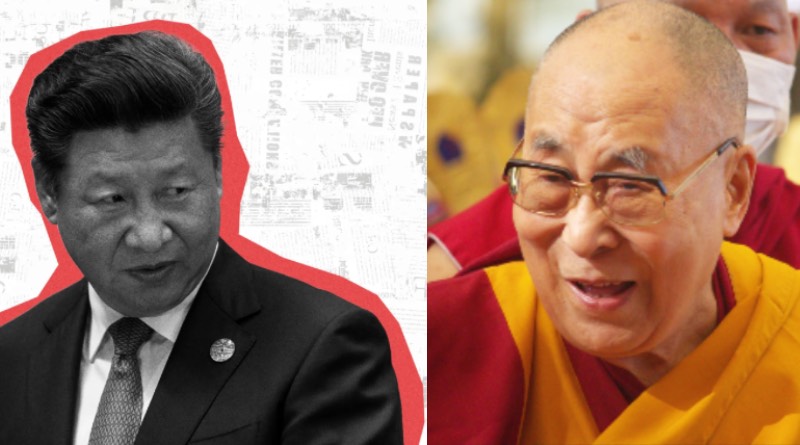
Beijing has consistently refused to negotiate with the Dalai Lama. This stance is not tactical indecision but a deliberate strategy: the Chinese leadership is playing a waiting game, anticipating that His Holiness’s passing will allow them to control succession and neutralise the Tibetan issue. While this approach may consolidate short-term authority, it carries significant risks for legitimacy, stability, and international relations.
Key Drivers of Beijing’s Strategy. Legitimacy concerns: Dialogue would confer political authority on the Dalai Lama, contradicting Beijing’s narrative that he is a separatist figure.
Precedent fears: Concessions to Tibet could embolden other minority regions to demand autonomy, threatening centralised governance.
Succession control: Beijing intends to appoint the next Dalai Lama through state mechanisms, reinforcing its claim to manage religious authority.
The Waiting Game. Beijing’s refusal to negotiate is rooted in three assumptions: Exile fragmentation: The Tibetan exile community will weaken without the Dalai Lama’s unifying leadership. State appointment: A government-appointed Dalai Lama will delegitimize the exile-recognized successor. Global fatigue: International attention will diminish after His Holiness passes away.
Risks and Vulnerabilities. Religious legitimacy crisis: Tibetan Buddhists worldwide may reject a state-appointed Dalai Lama, undermining Beijing’s authority. International solidarity: Succession disputes could galvanise global support for Tibet rather than diminish it.
Cultural erosion: Heavy-handed control risks deepening resentment and accelerating alienation among Tibetans.
Policy Implications. For Beijing: The strategy may secure short-term control but risks long-term instability and reputational damage.
For Tibetans in exile: Planning for succession and maintaining unity will be critical to counter Beijing’s narrative. For international actors: Sustained engagement on religious freedom and cultural preservation will be essential to prevent Beijing’s strategy from succeeding unchallenged.
Conclusion: Beijing’s refusal to negotiate is a calculated waiting game. Yet the assumption that succession can be controlled by decree ignores the spiritual legitimacy of Tibetan Buddhism. The passing of the Dalai Lama may not resolve the Tibetan issue—it may instead ignite renewed resistance and international solidarity.
Khedroob Thondup is a former Tibetan diplomat and parliamentarian and nephew of the 14th Dalai Lama. He is also the editor of the book, ‘Dalai Lama, My Son and Tibet in Turmoil.’
The views expressed in this article are those of the author and should not be attributed to Tibet Express.