The CCP’s Superpower Ambition: Wealth, Arms, and the Weight of Reality
By Khedroob Thondup
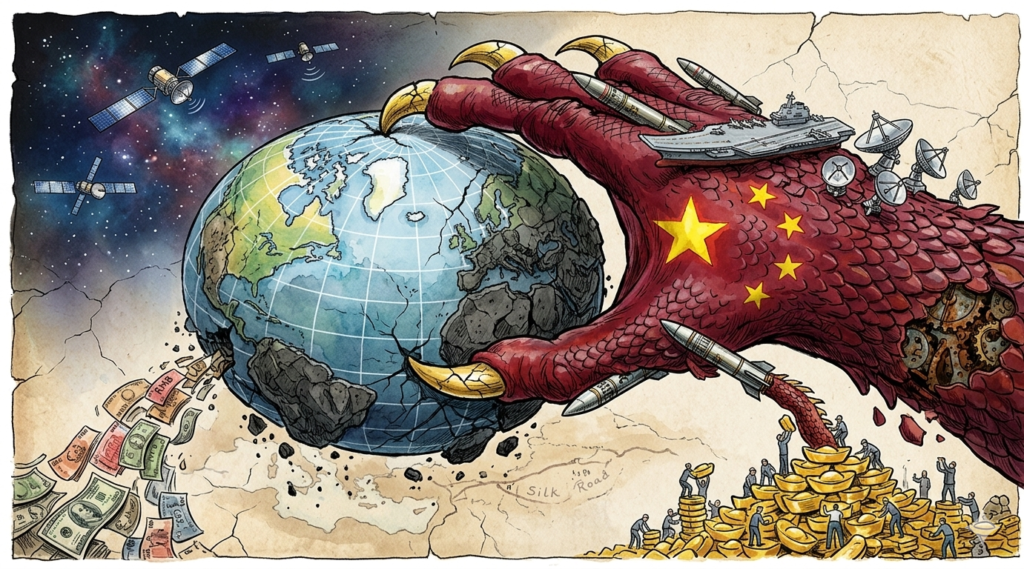
Chinese Communist Party (CCP) has long envisioned a future where the nation stands shoulder to shoulder with — or above — the United States as a global superpower. This ambition rests on two pillars: economic might and military strength. Yet, the trajectory is far from smooth. The CCP’s path is being tested by slowing growth, demographic decline, and intensifying confrontations abroad.
The CCP’s first pillar is economic dominance. Since Deng Xiaoping’s reforms, China has pursued wealth as the foundation of national strength. The logic is straightforward: prosperity fuels legitimacy at home and influence abroad. Through initiatives like the Belt and Road, Beijing has sought to translate economic clout into geopolitical leverage, binding countries into its orbit with infrastructure loans and trade dependency.
But cracks are showing. Youth unemployment is high, property markets are unstable, and debt burdens weigh heavily on local governments. The promise of endless growth is faltering, raising doubts about whether wealth alone can sustain the CCP’s superpower dream.
The second pillar is military strength. The CCP has poured resources into the People’s Liberation Army, transforming it from a land-based force into a modern military with blue-water naval capabilities, cyber warfare units, and advanced missile systems. The goal is clear: deter U.S. intervention in Asia, assert dominance in the South China Sea, and project power globally.
Yet military expansion invites confrontation. Tensions with the U.S. over Taiwan, clashes with India along the Himalayan border, and disputes in the South China Sea all test Beijing’s ability to wield its growing arsenal without triggering escalation.
China’s ambition collides with three stubborn realities: Economic slowdown: Growth is no longer guaranteed, and the CCP’s legitimacy is tied to prosperity. Demographic decline: A shrinking workforce and aging population threaten long-term productivity. Geopolitical pushback: Countries from Japan to Australia to the EU are recalibrating ties, wary of dependency and coercion.
The CCP’s vision of superpower status is not fanciful; it is rooted in decades of planning. But the paradox is stark: the very pursuit of wealth and military strength creates vulnerabilities. Economic fragility undermines confidence, while military assertiveness provokes resistance.
China may still rise, but the path is jagged, contested, and uncertain. The CCP’s challenge is not simply to build wealth and arms, but to manage the contradictions of power in a world that increasingly resists its embrace.

Khedroob Thondup is a former Tibetan diplomat and parliamentarian, and nephew of the Dalai Lama. He is also the editor of the books Dalai Lama, My Son and Tibet in Turmoil.
The views expressed in this article are those of the author and should not be attributed to Tibet Express.